What Can (and Can't) Go in a Roll-Off Dumpster in Georgia
One of the best things about a roll-off dumpster is how much it simplifies a big project: you throw the debris in, we haul it away, done. But "throw it all in" has a few important exceptions. Georgia regulates certain materials — hazardous, environmental, or simply difficult to process — and those items can't go in a standard dumpster no matter how convenient it would be.
Knowing the list ahead of time saves you from a rejected load, an added fee, or a bin the landfill won't accept. Here's the complete, practical breakdown of what belongs in your roll-off and what needs to go somewhere else.
The green light: what you can toss freely
The overwhelming majority of what comes out of a home or job site is perfectly fine for a roll-off. If it's ordinary construction, renovation, or household debris, it almost certainly goes in the bin:
- Construction & demolition debris — drywall, lumber, framing, plaster, subfloor, siding, insulation
- Flooring — carpet, padding, tile, hardwood, laminate, vinyl
- Roofing shingles — with weight in mind (see our roofing guide)
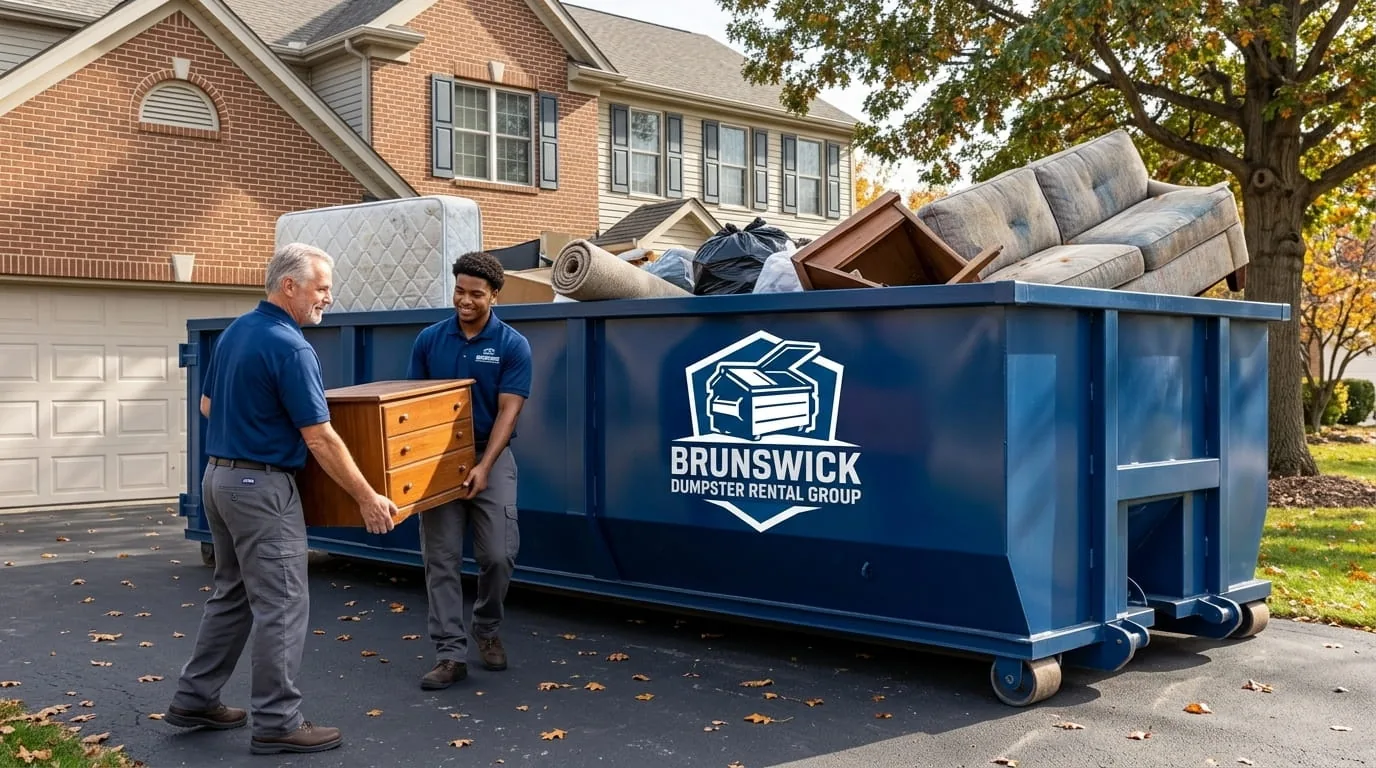
- Furniture — couches, tables, chairs, dressers, mattresses (some facilities charge a small mattress fee)
- Household junk — boxes, clothes, toys, books, general clutter from a cleanout
- Yard and storm debris — branches, brush, palm fronds, and limbs (weight matters here too)
- Fixtures — cabinets, countertops, sinks, tubs, toilets, doors, windows
If your project is a kitchen, bath, garage cleanout, roof, or general decluttering, you're mostly dealing with green-light material. That's the everyday work we handle across Brunswick and the Golden Isles.
The red light: what's prohibited
These items are restricted because they're hazardous, environmentally regulated, or banned from Georgia landfills. They cannot go in a roll-off dumpster:
Hazardous & chemical materials
- Paint, stains, solvents, and lacquers (wet)
- Motor oil, gasoline, antifreeze, and other automotive fluids
- Pesticides, herbicides, and pool chemicals
- Asbestos and asbestos-containing materials
- Propane tanks and other pressurized cylinders
Electronics & appliances with refrigerant
- TVs, monitors, and other e-waste
- Refrigerators, freezers, air conditioners, and dehumidifiers (contain freon that must be professionally removed)
Environmental & special-handling items
- Tires (charged and processed separately statewide)
- Batteries — car, lithium, and household
- Fluorescent tubes and bulbs (contain mercury)
- Medical waste and sharps
- Railroad ties and other creosote-treated wood
When in doubt, ask
If you're unsure whether something can go in the bin, call us before you toss it. A quick question is free; a rejected or contaminated load is not.
Where the prohibited stuff actually goes
Household hazardous waste
Paint, chemicals, and solvents belong at a household hazardous waste collection. Glynn County and the surrounding counties periodically host collection events, and local government resources list current drop-off options. Latex (water-based) paint is an exception worth knowing: once it's fully dried out — mixed with cat litter or a paint hardener and left open to harden — it can often go in the regular trash. Oil-based paint always needs hazardous handling.
Appliances with freon
Refrigerators, freezers, and AC units need their refrigerant professionally recovered before disposal. Many retailers will haul away your old unit when they deliver a new one, and scrap metal recyclers often accept them once the freon is removed.
Electronics, tires, and batteries
Electronics have dedicated recycling streams — look for county drop-offs or retailer take-back programs. Most tire retailers accept old tires for a small per-tire fee, and auto parts stores routinely take back car batteries. These are quick errands that keep your dumpster load clean.
Why the rules exist — and why they help you
It's easy to see these restrictions as red tape, but there's real logic behind them. Hazardous materials contaminate an entire load, which can get the whole bin rejected at the landfill and passed back to you as a problem. Freon and mercury are environmental hazards. E-waste and tires have dedicated recycling streams. Following the list protects our coast, keeps disposal costs down for everyone, and keeps your project moving without a snag.
Make it simple: tell us what you've got
You don't have to memorize any of this. When you book, describe your project and mention anything unusual — an old fridge, a stack of tires, cans of paint in the garage. We'll tell you what can ride along in the dumpster and point you to the right spot for anything that can't. Call (912) 324-7846 for a free quote and a clean, compliant haul across Brunswick and the Golden Isles.